
Prenatal Screenings
- Kriya Shah
- Sep 18, 2024
- 2 min read
In the early 1900’s, the maternal mortality was 9 out of 1000 live births, and 100 out of 1000 live-born infants died within the first 12 months. As years went on, the maternal and infant mortality rates have significantly declined. This is due to advancements in clinical medicine, technological improvements, and public health awareness. Over the years, doctors and practitioners have been using prenatal screening to prevent mortality and morbidity as well as ensure a safe delivery of the fetus.
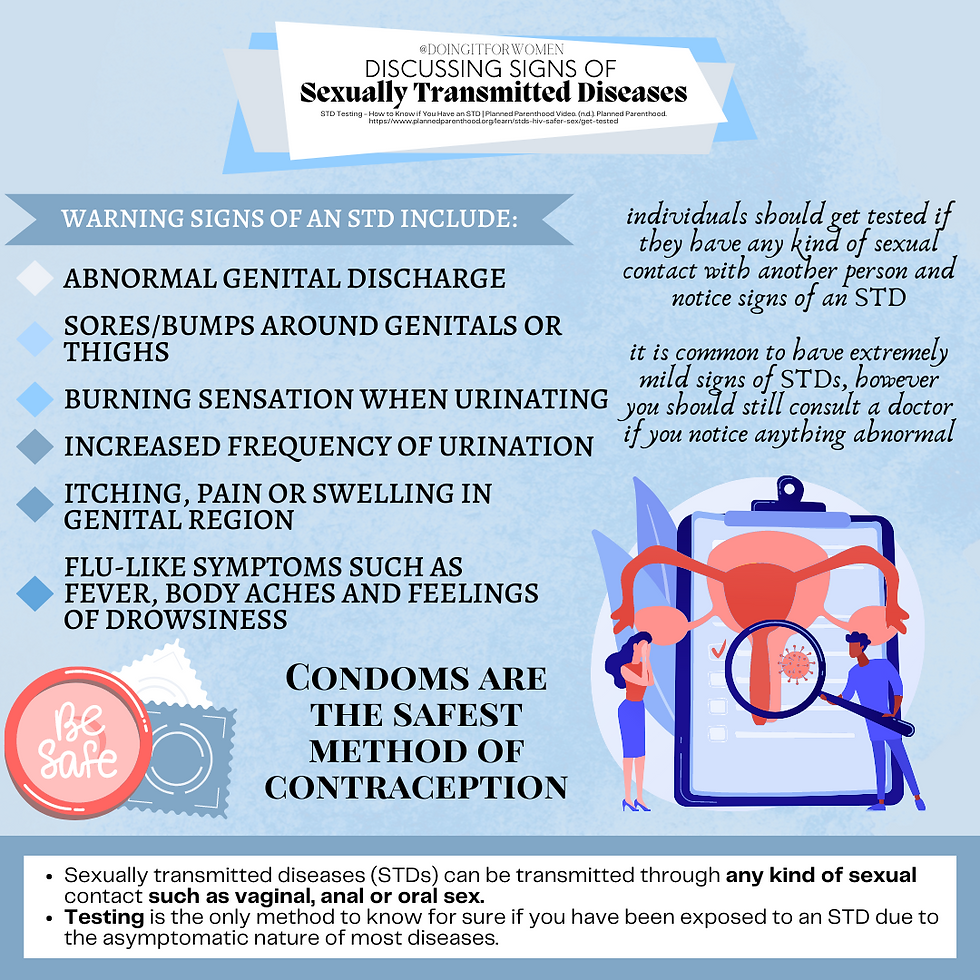
The first trimester is characterized from conception to the end of week 12. The first prenatal visit should consist of a general physical exam as well as a pelvic examination. It is also important to collect cervical cytology if one hasn’t been collected in the past 1 year and the patient is over the age of 21. During the bimanual pelvic exam, the physician should palpate for the uterus, adnexa, and cervix to confirm there are no abnormalities. Regarding laboratory testing, the first visit should include Rh(D) type and antibody screening, serological testing for syphilis, rubella, Neisseria gonorrhea, Chlamydia, HIV, and Hepatitis B. It is also vital to assess hemoglobin/hematocrit and collect a urine culture and protein. Additionally, aneuploidy screening can occur at the earliest of 10 weeks with cell-free DNA in women over the age of 35 or prior aneuploidy. Other aneuploidy screenings consist of nuchal translucency measurements and serum-free hCG and PAPP-A to detect Trisomy 18 or 21. This trimester is also important for determining the estimated due date and the gestational age which can be determined by measuring the crown-rump length through the ultrasound.
The second trimester starts from week 13 to the end of week 26. The maternal quadruple screening which consists of MSAFP, B-hCG, estriol, and inhibin A is commonly performed to detect genetic aneuploidies. The reference range for these markers are indicative of different diagnosis such as the trisomy’s, neural tube defects, or abdominal wall defects. Furthermore, it’s important to repeat the Rh(D) antibody test for the unsensitized (D)-negative women at week 24 and appropriately treat them with Rhogam depending on the results. During this time, women should also be screened for gestational diabetes with the oral glucose tolerance test. This is done through the 1 hour 50-gram glucose load. If these results are abnormal, the next screening is the 100-gram glucose load that is monitored every hour for 3 hours. The second trimester ultrasound consists of fetal cardiac activity, amniotic fluid volume estimate, placental location, number of vessels in umbilical cord, gestational age, fetal weight estimate, maternal anatomy, and fetal anatomic survey.
The third trimester starts from week 27 until 40 weeks. This trimester focuses on the wellbeing of the mother as well as taking all the precautions to reduce fetal morbidity and mortality. One of the most important screenings that take place is the Group B Streptococcus swab around 35-37 weeks. If positive, the treatment is a dose of Penicillin G to avoid complications. Before delivery takes place, fetal position and fetal weight is documented to determine whether a C-section or vaginal birth will be taking place.
Reference:
Kitchen FL, Jack BW. Prenatal Screening. [Updated 2023 Jul 4]. In: StatPearls [Internet]. Treasure Island (FL): StatPearls Publishing; 2024 Jan-. Available from: https://www.ncbi.nlm.nih.gov/books/NBK470559/


Comments